Three questions with Derek Howard

Three questions with a new ESnet staff member!  

Derek Howard is a software developer from Columbia, MO. Prior to joining ESnet, Derek worked as an HPC system administrator for the University of Missouri. Derek also created Augur (https://github.com/chaoss/augur) which is part of the Linux Foundation’s CHAOSS group (https://chaoss.community/), a working group focused on measuring the health and sustainability of open source software. 


Derek is part of the Network Services Automation group under John MacAuley, where he will be working primarily on our internal ESnet Database (ESDB).

Question 1: What brought you to ESnet?

I worked with George Robb at the University of Missouri and he joined ESnet a while ago and it seemed like a great place to work. I asked him if there were any positions at ESnet he thought might be a good fit for me and he referred me to the position I am in now. I’m really happy I joined; it is as great as I expected!

Question 2: What is the most exciting thing going on in your field right now?

With so much work underway for ESnet6, exciting changes are happening every day. We are pushing to get features out for all of our software as fast as possible right now. Right now, I am working on a feature in ESDB to make it easier for network engineers to verify hardware was installed correctly during router installs. 

As far as the broader field goes, I am excited about DDR5 memory becoming commercially available soon. 

Question 3: What book would you recommend?

Randall Munroe’s “What If?” – It’s a wonderful collection of serious answers to silly questions by the creator of XKCD.
Three Questions with Chris Cummings

Three questions with a new ESnet staff member!  

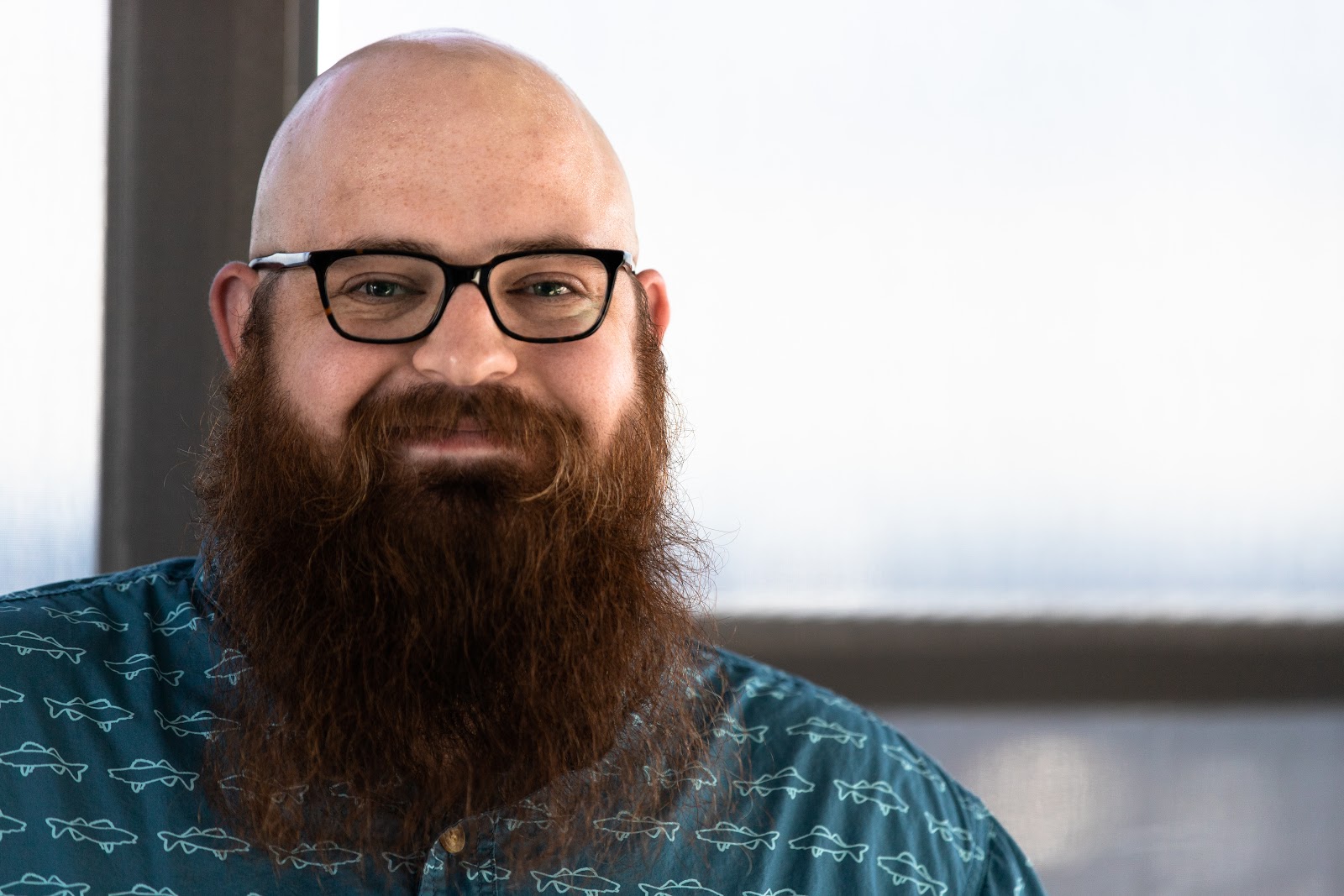
Chris has joined ESnet as a network engineer and is supporting the ESnet6 project and day-to-day operations. He is a Network Engineer based out of Chicago, IL with many years of on-the-job experience, designing, deploying, and managing networks.

Chris started his networking career working on wireless broadband internet at a Wireless Internet Service Provider (WISP) in Juneau, Alaska. He has worked in various network engineering roles including for heavy industry, and underground mining.

When not doing networking, you likely won’t be able to find Chris as he will be out in the woods camping and entirely off the grid.

Question 1: What brought you to ESnet?

I wanted to work at ESnet because I knew it would bring me an entirely different set of challenges than what I was used to and would place me in an environment with incredibly intelligent people who could help me sort through those challenges.

Question 2: What is the most exciting thing going on in your field right now?

I’d have to say that it is the explosion of resources and focus on network automation. Networking has typically lagged behind other IT disciplines in this regard, so I think it’s very exciting to see networking catch up and start to benefit from combining software development methodologies with traditional network engineering.

Question 3: What’s a book you recommend?

For networking specifically, I would highly recommend Computer Networking Problems and Solutions by Ethan Banks and Russ White. What I like about this book is that it closely follows the advice given in RFC 1925 rule 11, which states that “Every old idea will be proposed again with a different name and a different presentation, regardless of whether it works.” This high-level approach teaches you to think about networking problems in a more abstract manner so that when you are approached with a new problem you can apply a common framework to the solution rather than having to reinvent the wheel every time.

For something more leisurely, I would recommend reading The Dresden Files, which is a series of contemporary fantasy/detective/mystery books written from the perspective of a wizard who lives in modern-day Chicago.

Charting a resilient path for the future

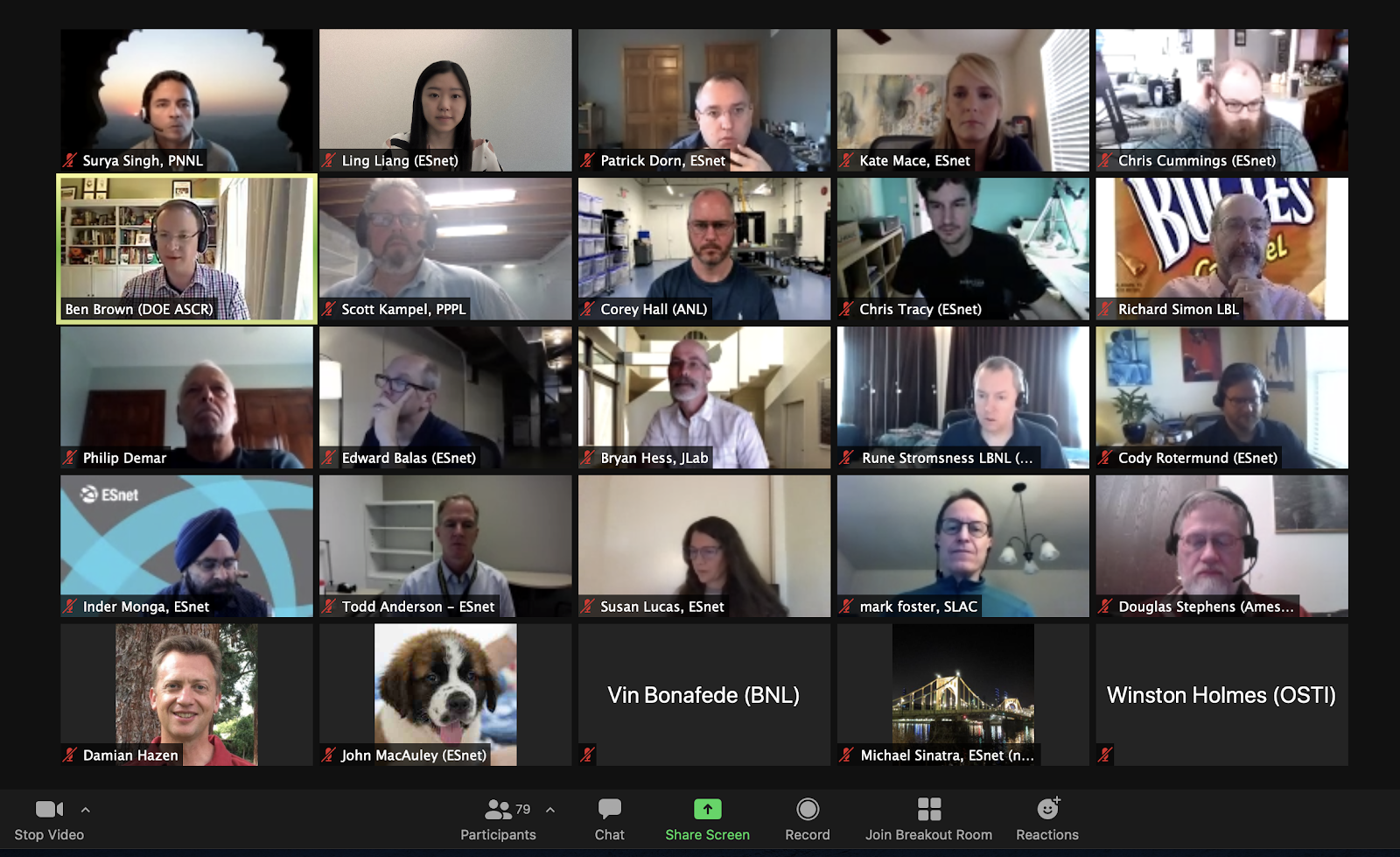
The ESnet Site Coordinating Committee (ESCC) meeting on 22-23 October was attended by over 50 members representing all of the major DOE sites and projects supported by our team. This was the first ESCC meeting held via Zoom.

The meeting focused on network resiliency, both on lessons learned from adapting to working from home, as well as longer term plans for ESnet6. 

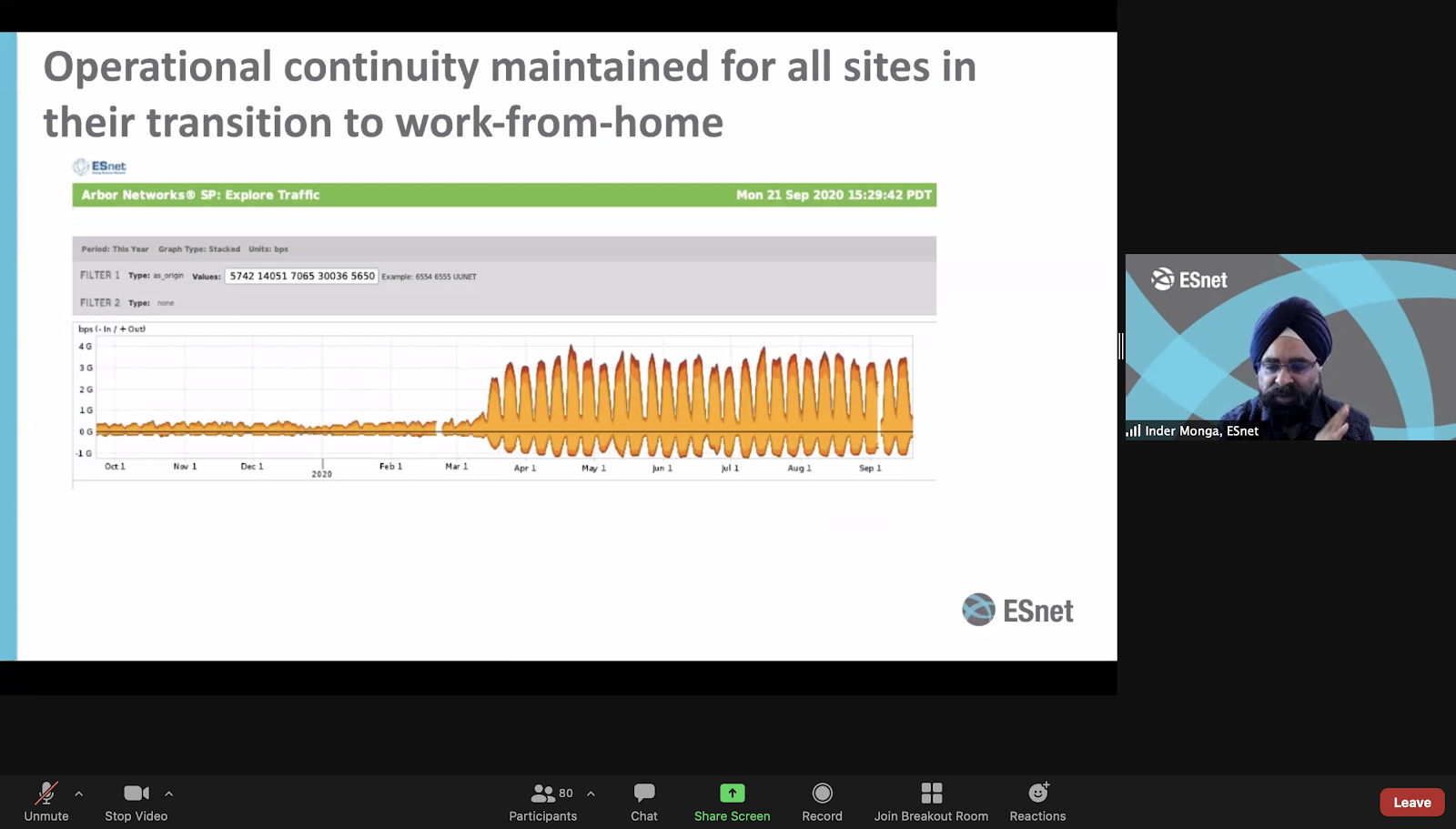
Highlights of the sessions were ESnet’s director Inder Monga’s presentation on the ways we ensured operational continuity during the pandemic. 

Inder Monga presents on ESnet's support for the DOE complex during the pandemic
Inder Monga presents on ESnet’s support for the DOE complex during the pandemic

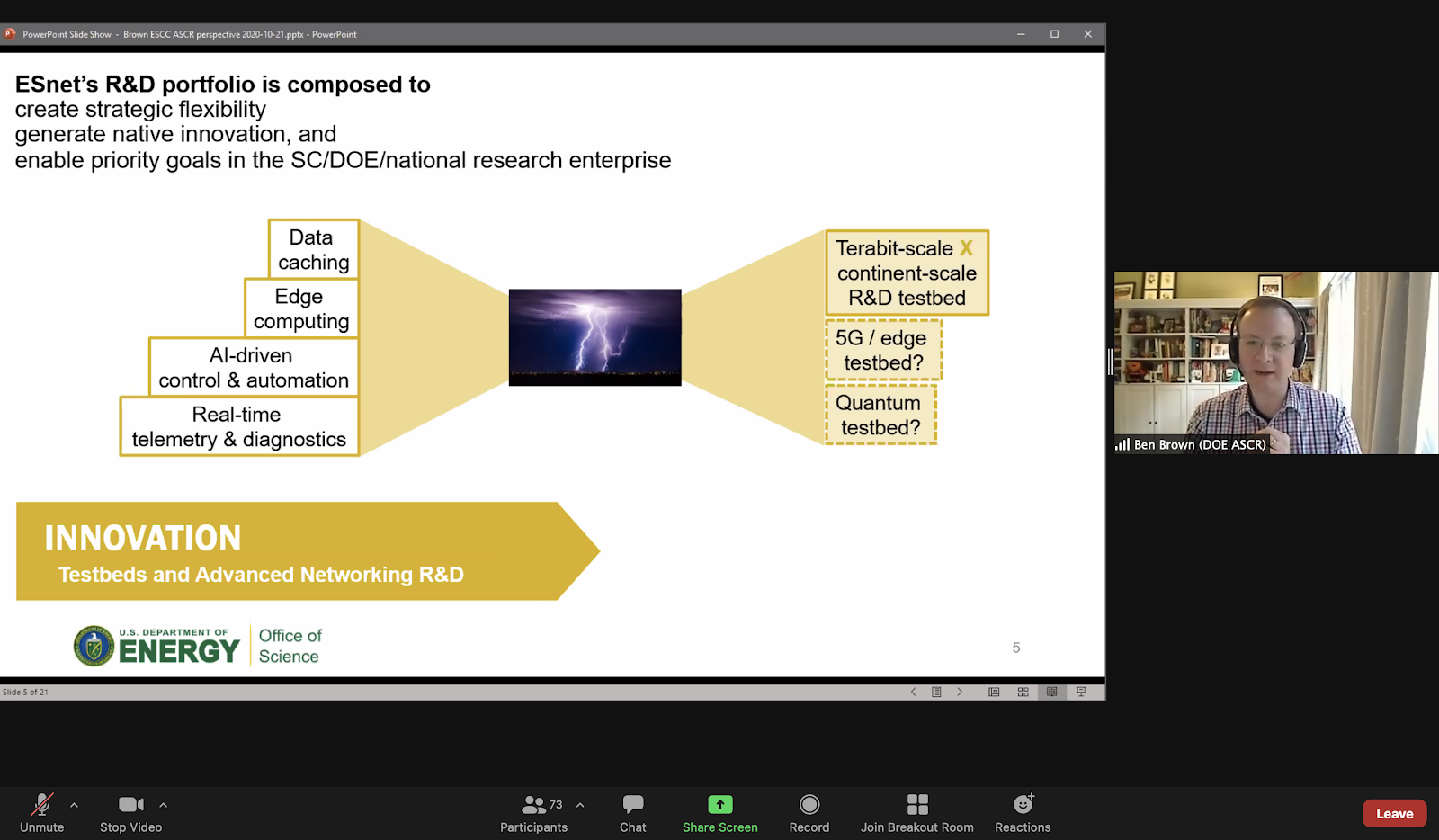
The DOE ESnet program manager, Ben Brown, provided a vision for future research opportunities as well as future operational needs for the nation’s scientific complex.

DOE's Ben Brown presents on future objectives and priorities
DOE’s Ben Brown presents on future objectives and priorities

Attendees identified several key activities for ESCC collaboration as part of advancing shared resilience goals. Foremost among these is the creation of a working group to develop improved metrics for ESnet resilience, to identify ways that resilience features can be better incorporated into infrastructure funding and planning, and to establish better ways to engage scientific programs into risk management processes.

ESnet thanks ESCC participants for attending and we look forward to returning to in-person ESCC meetings in future!

A sample of attendees zoom screenshots - the first ESCC via Zoom
A sample of attendees – the first ESCC via Zoom